



















Why would a Toronto startup hire a remote web design agency?
A Toronto startup rarely needs its designer down the street. It needs a team that answers during the Eastern-time workday, understands that the first customers are often Canadian while the next round depends on US traction, and can write a site that works for both. Designify is a remote studio, and we say so upfront: no Toronto office, no local address, just one small team that owns the words, the design and the code.
What you get instead of a local agency's overhead is a fixed price and no handoffs between a copywriter, a designer and a developer. Our startup website package is $8,000 for up to 6 pages. We quote in US dollars, so your finance team should convert at the current rate when comparing quotes in Canadian dollars.
How do you write one site for Canadian and US buyers?
Write for the market you're moving into, and prove the market you already have. Many Toronto startups plan to grow in the US, so the homepage should read naturally to a buyer in Chicago or New York, while proof from Canadian customers carries the credibility. That tension shapes the copy more than any design choice.
Decision | What we usually recommend |
|---|---|
Spelling | Pick one and apply it everywhere. US spelling if the US is the growth market; Canadian spelling if most buyers are domestic |
Currency | Show the currency on every price. If you sell in CAD and USD, let visitors switch rather than guessing |
Proof | Canadian logos and case studies are fine for US buyers, as long as the problem they describe is the same one |
Contact and support | State your support hours in a time zone, so a buyer in California knows when someone answers |
Legal pages | Privacy and terms that cover both countries, reviewed by your counsel, not copied from a template |
If the US is the bigger bet, consider a dedicated page for US buyers that answers their specific questions: data residency, contracts in US dollars, and who handles support in their hours. Our guide to the B2B buyer journey on a website covers how those checks happen late in a deal.
What Ontario accessibility rules apply to a startup website?
If your company has 50 or more employees in Ontario, the accessibility rule for your public site is specific. According to the Government of Ontario's guidance under the Accessibility for Ontarians with Disabilities Act (Ontario Regulation 191/11), public websites of private and non-profit organizations with 50 or more employees must meet WCAG 2.0 Level AA, with exceptions for live captions and pre-recorded audio descriptions.
Most early startups are under that threshold, but it's worth designing to the standard anyway. Larger customers increasingly ask about accessibility in procurement, and fixing contrast, focus states and form labels after launch costs more than building them in. We design and build with WCAG 2.2 AA as the target, which includes the 2.0 criteria. Read our accessible web design guide and how to test your site's accessibility for the checks we run.
Does a Toronto startup need a French version of its site?
Not because you're in Ontario, but often because of Quebec. Ontario doesn't require a private company's marketing site to be in French. Quebec's Charter of the French Language is different: businesses that sell or advertise to customers in Quebec are generally expected to offer a French version of their site of comparable quality, and the rules were tightened by Quebec's Law 14 (formerly Bill 96).
If Quebec customers matter to you, plan French from the start rather than bolting it on. That means a layout that survives longer French strings, a CMS set up for two locales, and a real translator rather than machine output for legal and pricing pages. Our guides to multilingual websites and localization versus translation explain the setup. We aren't lawyers, so confirm the scope with counsel or the Office québécois de la langue française.
What should your signup and demo forms do under Canada's anti-spam law?
Every form that adds someone to your marketing list needs a clear consent step. Canada's Anti-Spam Legislation (CASL) requires consent before you send commercial electronic messages, plus identification of the sender and a working unsubscribe in every message. That affects how we design newsletter signups, demo requests and gated content.
- Separate consent from the request. A demo request is not consent to a newsletter. We add an unticked opt-in box with plain wording.
- Say who is asking. The form and the confirmation email name your company and how to reach you.
- Record the consent. We connect forms to your CRM so the opt-in, its wording and its timestamp are stored together.
- Keep unsubscribe obvious. Your email tool handles it, but the site's preference page should match.
Privacy works the same way: Canada's federal privacy law, PIPEDA, and Quebec's Law 25 shape what your privacy page and cookie banner have to say. Our cookie banner design guide and privacy-friendly analytics cover the design side.
What do Toronto fintech and AI startups need from a website?
Two common kinds of Toronto startup are financial technology companies selling to banks and finance teams, and AI companies coming out of a research-heavy ecosystem. They need different things from a site, but both have to make something complex legible fast.
Pros
- **Fintech:** plain-language explanation of who holds the money and which entity is regulated, near the claim
- **Fintech:** security and compliance pages a bank's vendor-risk team can forward
- **AI:** a demo, a product walkthrough or a sample output above the fold, not a research abstract
- **AI:** a clear line between what the model does on its own and what a person approves
Cons
- **Common miss:** leading with the research credentials instead of the buyer's problem
- **Common miss:** generic stock imagery of dashboards that don't exist yet
- **Common miss:** a single homepage trying to sell to banks, mid-market and consumers at once
- **Common miss:** no security or data-handling page until procurement asks for one
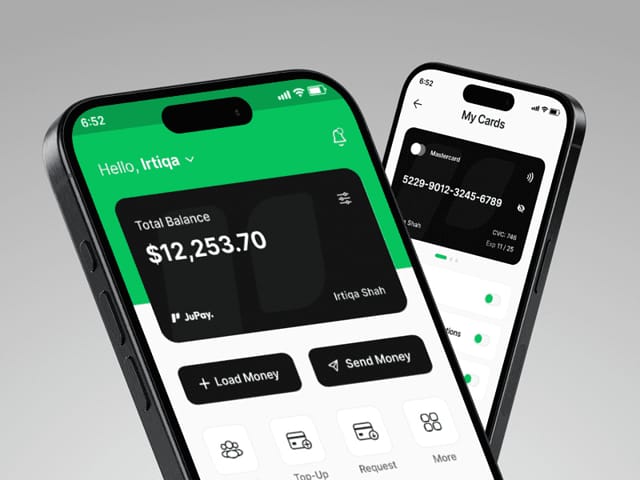
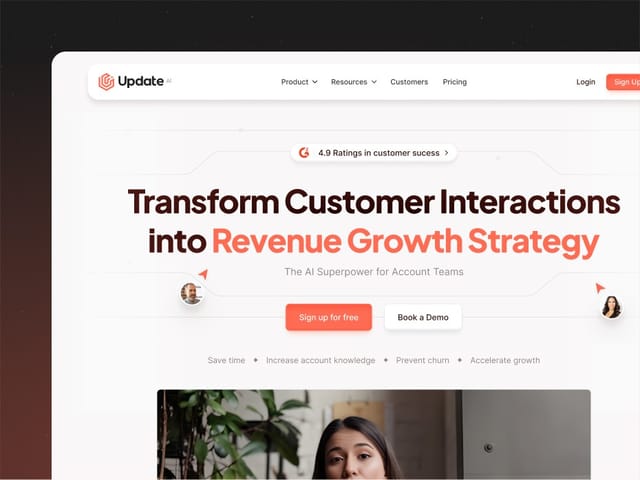
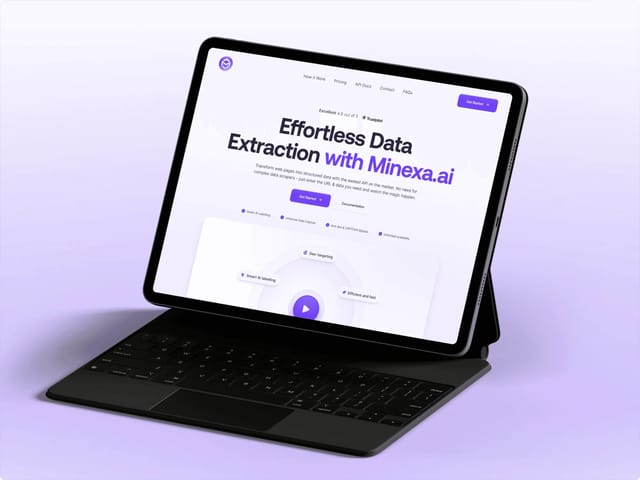
We've designed and built sites in both areas, including Jupay in payments and Update.ai and Minexa AI in AI. See our payments industry page and AI agents page for what those sites include.
How do we work with Toronto teams on Eastern time?
Toronto runs on Eastern time: UTC−5 in winter and UTC−4 from March to November, the same clock as New York. We agree a standing call slot inside your workday when we scope the project and keep everything between calls in writing, so nobody waits on a meeting to make progress.
If you have teammates or investors in Vancouver or San Francisco, San Francisco is three hours behind you all year, and Vancouver is three hours behind in summer and two in winter, now that BC has stopped changing its clocks. We book shared reviews in the Toronto afternoon so the West Coast can join in their morning, and collect feedback in Figma comments so people respond in their own day. Read what working with a design agency looks like week to week.
How does our process work?
Free 30-minute call
At a time that suits the Toronto workday. We learn the product, the buyers in each country and the deadline, and confirm which fixed-price offer fits.
Message and copy
We write the site first, so your team and counsel review claims, consent wording and any French requirements before design.
Design
Custom design in Figma for desktop and mobile, with WCAG 2.2 AA as the target and comments collected in one place.
Build and launch
We build in Next.js with a CMS, connect forms to your CRM with consent recorded, and launch. Timelines are scoped on the intro call.
How much does a website cost for a Toronto startup?
Our prices don't change by city. A website is $8,000 for up to 6 pages plus $500 per extra page, a landing page is $6,000, a brand and design sprint is $3,000, and the retainer is $6,000 a month, all in US dollars. Toronto agency quotes vary widely by scope and seniority, so compare what's included: copy, the build and the CMS, not just the design.
A hypothetical scope for a Toronto fintech expanding to the US
For example, suppose a seed-stage Toronto fintech selling to finance teams needs a homepage, product, security, pricing, about and a page for US buyers. That's 6 pages, so it fits the $8,000 website. A French version for Quebec customers would add pages and translation, which we scope on the call. Copy is written first, so counsel can review claims and consent wording early.
If you want to see how we work before committing, the trial week is $1,000. Otherwise, the next step is a free 30-minute call, and every offer is on our pricing section. For wider benchmarks, read web design costs by country.