



















What does Webstacks do, and who is it for?
Webstacks is a web agency for B2B companies that treats the website as a product that's never finished. Its site describes composable and headless builds on stacks such as Next.js, Astro, Sanity, Storyblok and Contentful, plus Webflow and WordPress, and two main engagements: redesigns and migrations, and ongoing website teams on retainer.
It's built for marketing teams at SaaS, AI, fintech and developer-tools companies whose site has many pages, many contributors and integrations to keep running. Its published content leans toward larger, enterprise-scale programs. Check their site for current services and engagement terms, since agencies change them. If you're still choosing between stacks, start with our SaaS website design guide.
Why do startups look for Webstacks alternatives?
Startups usually look elsewhere when the engagement is larger than the problem. A seed or Series A company often has a small site, one marketer and an unclear message. That company needs the homepage argument fixed and a fast, clean build more than a composable architecture.
- Scope. A headless stack with a separate CMS, front end and integrations is powerful, and also more to run.
- Budget shape. Ongoing programs make sense once the site is a channel with a team behind it. Before that, a fixed project is easier to plan.
- Message first. If buyers don't understand the product from the hero, the stack won't fix it.
- Speed to change. A small team often wants to edit pages without a developer, which favors Framer or Webflow.
Our guide on how to choose a SaaS website agency has the questions to ask any agency before you sign.
What are the main alternatives to Webstacks?
There are five realistic alternatives, and they differ mainly in team size and how much architecture you take on. The typical ranges below are what we see quoted in published agency pricing in 2026. They vary widely by scope.
Option | Best for | Typical range we see quoted | Watch out for |
|---|---|---|---|
Large B2B web agency | Complex sites, many teams, integrations | Next.js builds about $20k to $120k | Engagement size for an early site |
Webflow specialist agency | Marketing teams that edit daily | Webflow projects about $5k to $80k+ | CMS limits at large scale |
Freelance developer | A defined build from finished designs | Hourly, varies by region | No copy or design ownership |
In-house web team | A site that is a core channel | Full salaries plus tools | Months to hire |
Small studio (Designify) | Startup sites that need message and build | $8,000 for up to 6 pages | Not built for enterprise programs |
For a fuller breakdown of where those numbers come from, read how much a SaaS website costs.
How does Designify compare with Webstacks?
Webstacks is a larger B2B agency built around composable architecture and ongoing website teams. Designify is a small studio where one team writes, designs and builds startup sites, at fixed prices. The Webstacks column reflects how its site describes the service in 2026, so check their site for current details.
Webstacks | Designify | |
|---|---|---|
Model | Redesigns, migrations and website team retainers | Fixed-price projects or a $6,000/month retainer |
Typical client | B2B marketing teams at growth and enterprise stage | Funded startups |
Stack | Composable and headless, plus Webflow and WordPress | Next.js, Framer or Webflow |
Copywriting | Check their site for current scope | Included: we write first, then design |
Price | Not published in our research; check their site | $8,000 for up to 6 pages, $500 per extra page |
Way to start | Book a call | $1,000 trial week or a free 30-minute call |
What does a Designify website include for $8,000?
Our website package is $8,000 for up to 6 pages, plus $500 for each extra page. It includes the copy, a custom design, a Next.js build with a CMS and animation, from one team. Delivery timing is scoped on the intro call, and so is any migration work.
Intro call
A free 30-minute call. We look at your current site, your buyers and your next milestone, then confirm the pages and the fixed price.
Message and structure
We write the homepage argument, the sitemap and every page's copy first, so you approve what the site says before how it looks.
Design
A custom design in Figma for desktop and mobile, built around the copy and your proof.
Build and launch
We build in Next.js with a CMS your team can edit, connect forms and analytics, and launch.
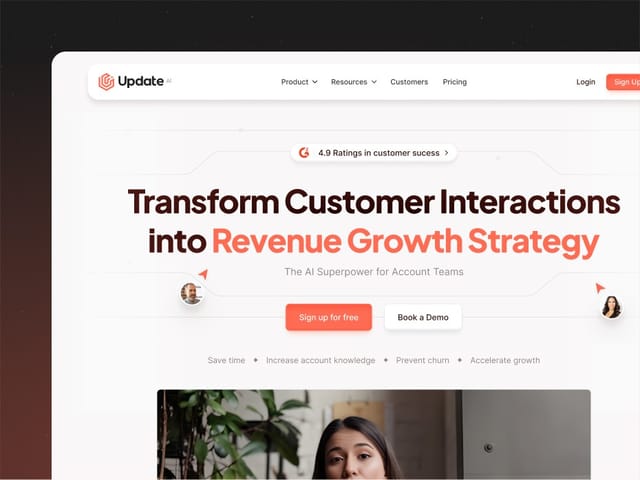
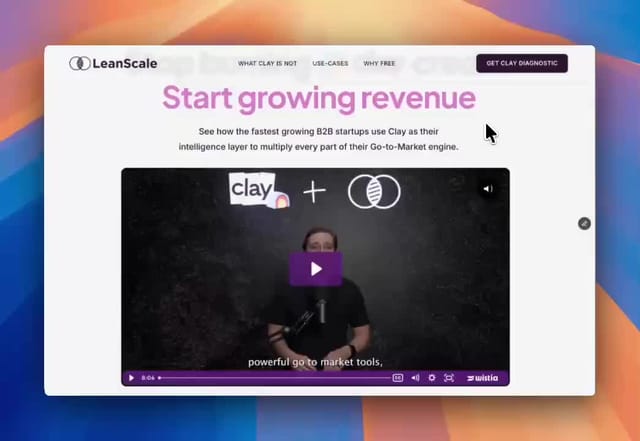
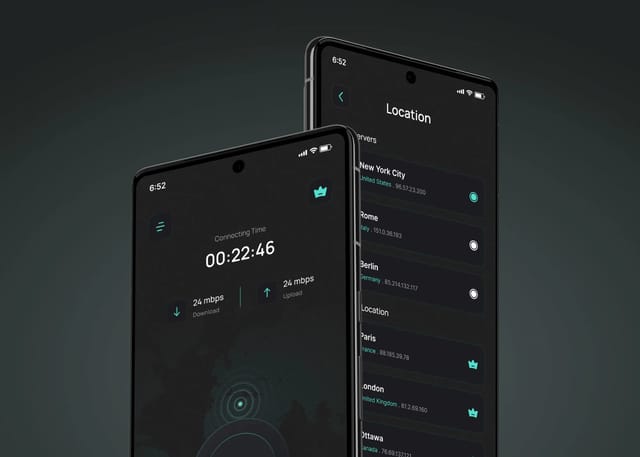
We've designed and built sites for B2B and AI companies such as Update.ai, LeanScale and Wirefox VPN. See our SaaS website design service for scope, and Next.js development if you already have designs.
When is Webstacks the better choice?
Webstacks is the better choice when your site is large, owned by a marketing department, and connected to many systems. If you're running localization, a big content library and several teams publishing at once, a composable architecture and a standing website team are worth the investment.
Pros
- Deep focus on B2B marketing sites
- Composable and headless expertise across many CMSs
- Ongoing website teams for sites that never stop changing
- Broad services: design, engineering, SEO, CRO
Cons
- More architecture than many early-stage sites need
- Ongoing programs suit companies with a web budget line
- A large stack takes more effort to own after launch
- Pricing isn't something we could confirm, so ask early
A hypothetical stage-by-stage path
For example, suppose a Series A developer-tools company has a 7-page Webflow site and a vague hero. It hires a small studio to rewrite and rebuild the site at a fixed price. Two years later, with a docs portal, a content team, three languages and a dozen integrations, it moves to a composable stack and a standing website team. Each step matches the size of the problem.