



















What is Kimp, and who is it a good fit for?
Kimp is a design subscription: you pay a flat monthly fee, submit requests through its own project platform, and a dedicated team works through them in a queue. It offers graphics, video, or a combined plan, and it's built for marketing teams that need a high volume of assets without hiring.
That makes it a good fit for social posts, ad variations, presentations, print pieces and short videos. Kimp's site also lists web, app and UI design, delivered as visual designs from your wireframe, and it lists coding and development among the requests it doesn't take. Check their site for the current plans, limits and trial terms, since subscriptions change them often. For how the model works in general, read our explainer on what a design subscription is.
Why do teams look for Kimp alternatives?
Most teams start looking when the work stops being a list of assets and becomes a website problem. A queue of requests suits clearly briefed outputs. It suits much less well a homepage that needs a new argument, a pricing page that needs rethinking, or a product launch that has to ship in code.
- You need the site built. Visual designs still need a developer, and someone has to manage that handoff.
- You need the words. A request queue expects you to bring the brief and the copy. Many startup sites fail on the message, not the visuals.
- You need a wireframe first. If you don't know what the page should say or in what order, you need strategy before production.
- You need one accountable team. Splitting design and build across vendors means nobody owns the result.
None of this is a criticism of the model. It's a different job. Our guide to unlimited design subscription alternatives covers the wider category.
What are the main alternatives to Kimp?
There are five realistic alternatives, and the main difference between them is whether development is included. Pick based on whether your bottleneck is asset volume or a website that has to work.
Option | Best for | Includes code? | Watch out for |
|---|---|---|---|
Another graphics subscription | Ads, social and decks at volume | Usually not | The same gap if you need a site |
Subscription with a web tier | Design plus some web work | Sometimes, at higher tiers | What "web" actually covers |
Freelance designer and developer | A defined project | If you hire both | You manage the handoff |
In-house designer | Daily, long-term design work | Rarely, unless you also hire a developer | Hiring time and full salary |
Design and development retainer (Designify) | A website that keeps changing | Yes: Next.js, Framer or Webflow | Higher monthly fee than graphics plans |
ManyPixels' design subscription pricing index found web design locked behind higher tiers across the subscriptions it tracked, with a median entry price of about $899 a month. That gap is why so few subscriptions can take a page from brief to live site. For more on the split, see design agency vs design subscription.
How does Designify compare with Kimp?
Kimp is a production subscription for graphics and video. Designify is a small studio where one team writes, designs and builds websites, landing pages and product UI. The table below reflects how Kimp describes its service on its own site in 2026, so check their site for current details.
Kimp | Designify | |
|---|---|---|
Model | Flat-fee graphics and video subscription | Fixed-price projects or a monthly retainer |
Best at | Ads, social, decks, short video | Websites, landing pages, product UI |
Website build | Listed as outside its scope | Included: Next.js, Framer or Webflow |
Copywriting | You bring the brief and copy | We write first, then design |
How work is managed | Request queue in their platform | Shared priorities; we join customer calls |
Price | Monthly plans; check their site | $6,000/month retainer |
Trial | Free trial; check their site for terms | $1,000 paid trial week |
What does the Designify retainer include for $6,000 a month?
Our retainer is $6,000 a month for an ongoing design and development team. We don't track hours, we join customer calls when it helps, and the same people own the words, the Figma files and the code. It replaces the handoff between a design subscription and a separate developer.
Intro call
A free 30-minute call. You walk us through the site, the product and what's blocking you, and we say whether a retainer or a fixed project fits better.
Set priorities
We agree on the first pages or features to tackle and the order, based on what moves signups, demos or sales.
Write and design
We draft the copy first, then design in Figma, so you review the argument before the visuals.
Build and ship
We build in Next.js, Framer or Webflow, connect forms and analytics, and ship. Then we move to the next priority.
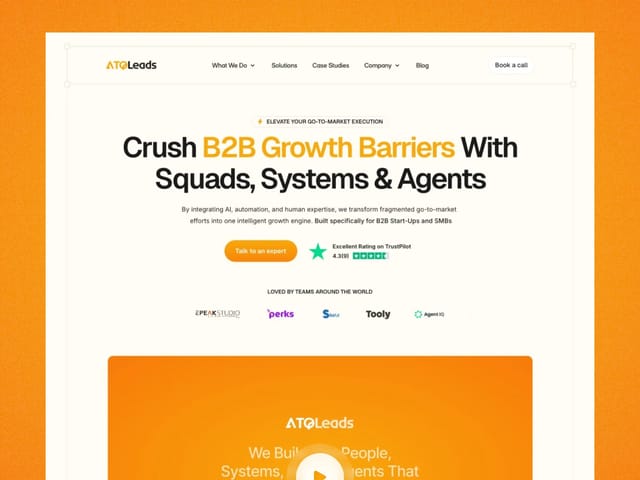
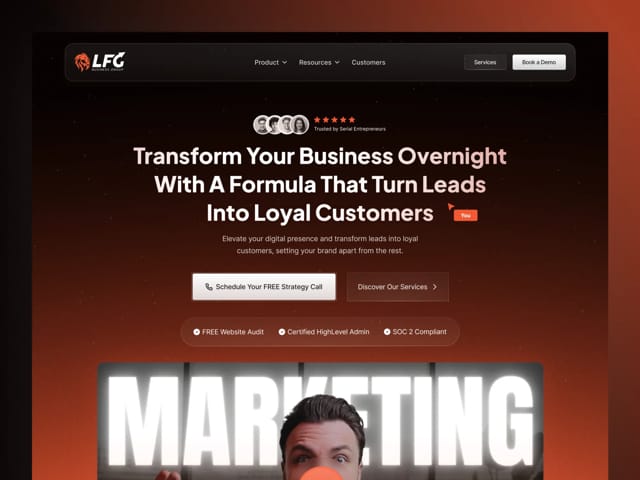
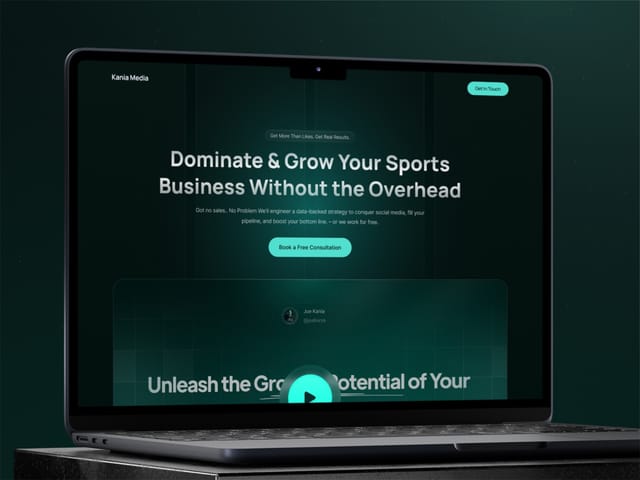
We've written, designed and built marketing sites for companies such as ATQ Leads, LFG and Kania Media. For more detail, see our design subscription service, and read design and development retainers for how this model differs from a design-only plan.
When should you stay with Kimp?
Stay with Kimp if your main need is a steady flow of marketing assets and your website is already in good shape. A graphics subscription is also a sensible add-on to a web team: one handles campaign creative, the other handles the site.
Pros
- Predictable monthly cost for a high volume of assets
- Graphics and video under one subscription
- A dedicated team and a structured request queue
- No hiring, onboarding or management overhead
Cons
- No coding, so a site still needs a developer
- You supply briefs, wireframes and usually the copy
- Queue-based work suits outputs, not open-ended strategy
- Web design is visual only, without the build
A hypothetical way to combine the two
For example, suppose a seed-stage startup runs paid social and ships a product update every month. It keeps a graphics subscription for ad variations and launch visuals, and it uses a design and development retainer for the homepage, pricing page and launch pages. Each vendor does what it's built for, and the website has one owner.
How do you switch from Kimp without losing momentum?
Switching is mostly about collecting what you already have. Export your brand files, templates and the asset library before you cancel, and list the requests still in your queue so nothing is dropped.
- Download your source files, brand assets and any website designs you've received.
- Write down which requests are open and which are recurring, such as monthly social sets.
- Decide whether recurring graphics stay with a subscription or move to the new team.
- Book a free 30-minute call with the new team and share the website designs, so build work can start from them.